
Well-being is an optimal and dynamic state that allows individuals to achieve their full potential.
At NEBRASKA, it’s an eight-dimension model. Full well-being includes emotional, intellectual, social and physical factors that impact how you feel and experience your life. By prioritizing your whole self, you help to build a supportive environment for yourself and your fellow Huskers.
Below you will find programs and resources in each dimension to support your well-being journey.
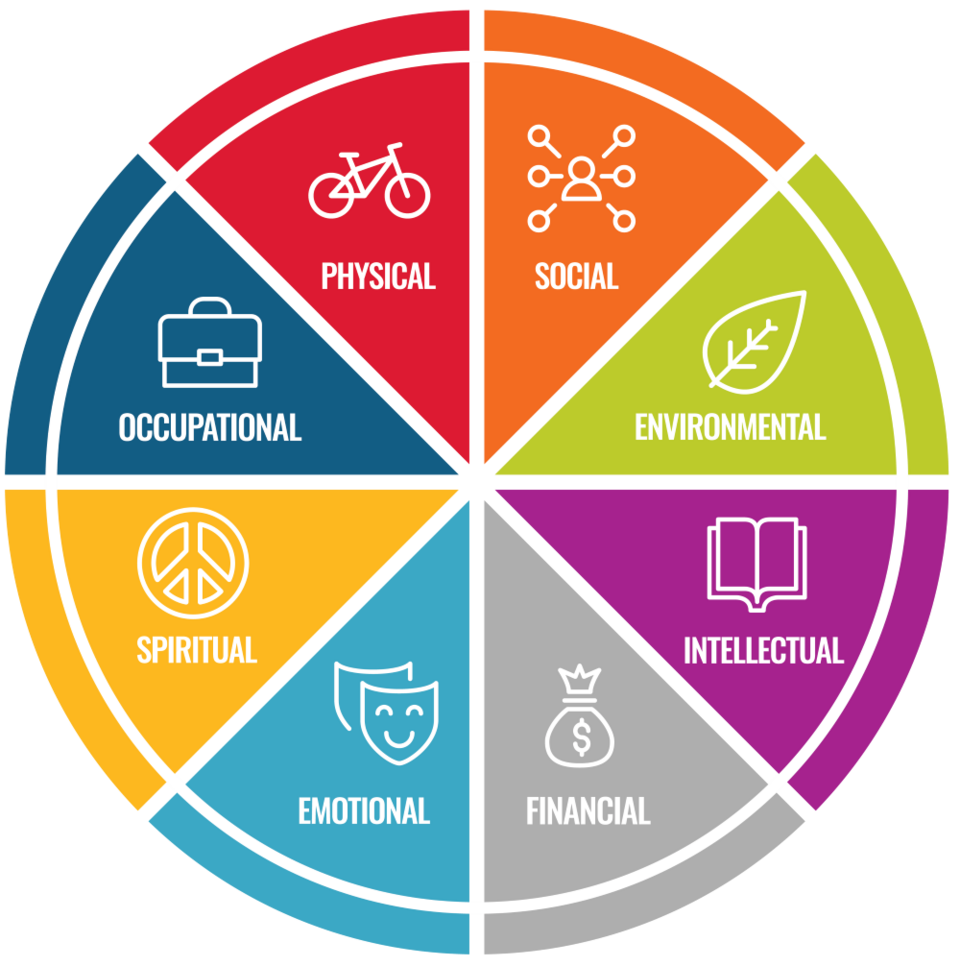
Emotional
This is the ability to successfully express and manage an entire range of feelings, including anger, doubt, hope, joy, as well as many others. Positive emotional well-being encompasses high self-esteem, positive body image, knowing how to regulate feelings and knowing where to seek support and help regarding mental health. It is not limited to seeking counseling services.
Environmental
This is the ability to appreciate the external cues and stimuli from the environment. It means recognizing the limits of earth’s natural resources, realizing the effects of daily habits on the world around us and living a life accountable to environmental needs.
Financial
This is the ability to fully understand an individual’s current financial state. Financially well individuals set long and short-term goals to reach and achieve self-defined financial success.
Intellectual
This is the ability to seek knowledge and activities that further develop critical thinking and global awareness. Intellectually well individuals engage in lifelong learning and activities associated with a range of subjects that enrich their lives personally and professionally.
Occupational
This is the ability to pursue a fulfilling career on a variety of levels. It includes finding satisfaction and enrichment in work while pursuing opportunities to reach professional goals.
Physical
This is the ability to actively make healthy decisions on a daily basis. It includes eating a nutritionally-balanced diet, getting adequate sleep, visiting the doctor routinely, maintaining positive interpersonal relationships, and making healthy sexual decisions consistent with individual values and beliefs. A physically-well individual exercises three to five times per week, limits or abstains from alcohol and drugs, possesses the ability to identify and fulfill personal needs, and is aware of and respects their body’s limitations.
Social
This is the ability to build healthy relationships based on interdependence, trust and respect. It includes being aware of the feelings of others. Socially well individuals develop a network of friends and co-workers who share in common purpose, who provide support and validation.
Spiritual
This is the ability to identify a core set of personal beliefs which guide decision-making and other faith-based endeavors, while understanding others may have a distinctly different set of guiding principles. Individuals who are spiritually well recognize the relationship between spirituality and identity in all persons.
The Association of Campus Religious Workers (ACREW)